Key Takeaways
- VLT percentage describes how much visible light passes through the finished glass and film.
- A darker film does not automatically provide better heat rejection.
- Fort Myers commuters should consider glare, nighttime visibility, and all-day outdoor parking.
- Florida has different rules for windshields, front side windows, and windows behind the driver.
- A clean installation and verified product data matter as much as shade selection.
Table of Contents
- Why Window Tint Matters in Fort Myers
- Visible Light Transmission Explained
- Florida Window Tint Rules to Check First
- Compare Common Window Film Types
- Understand Heat, UV Rays, and Glare Reduction
- Match Tint to Your Vehicle
- What to Look for in a Quality Installation
- How to Care for Newly Tinted Windows
- Common Questions About Vehicle Window Tint
- Conclusion
Fort Myers drivers deal with intense sunshine, hot parking lots, reflective pavement, and long stretches of bright-road driving. The right window tint can make daily trips more comfortable by reducing glare and helping the cabin feel less exposed to the sun. It can also complement other appearance and protection upgrades, including ceramic coating for cars in Fort Myers, FL, for a vehicle that looks polished while facing Southwest Florida conditions.
However, choosing tint is not simply a matter of selecting the darkest shade. A practical choice should balance heat control, visibility, Florida legal requirements, driving habits, and the way the film will look with the vehicle’s factory glass and trim.
Why Window Tint Matters in Fort Myers
A vehicle parked outside during a Fort Myers workday can quickly develop hot seats, a warm steering wheel, dashboard glare, and difficult-to-read navigation screens. Tint can help control visible brightness and improve comfort on routes through downtown, along U.S. 41, or across the Caloosahatchee. The goal is better comfort without making mirrors, pedestrians, cyclists, or road hazards harder to see.
Drivers looking online for automotive ceramic coating near me may also be thinking about how to protect a vehicle from local sun exposure. While coating protects exterior surfaces, window film addresses the light and heat coming through the glass.
Visible Light Transmission Explained
Visible Light Transmission, or VLT, is the percentage of visible light that passes through the window. Higher VLT means a lighter result. Lower VLT means a darker result. The important number is the reading through the vehicle’s original glass and the added film together, not just the film percentage shown on the packaging.
- Factory privacy glass can already be dark, especially on SUVs and vans.
- Aftermarket film can change the finished VLT more than expected.
- A tint meter provides a reliable finished-glass measurement.
- Light film can still offer strong solar performance, depending on the product.
Florida Window Tint Rules to Check First
Check legal limits before choosing a film. Florida treats windshield areas, front side windows, and rear windows differently. The rules for windows behind the driver set different light-transmission allowances for passenger vehicles and multipurpose passenger vehicles, while front-window requirements are stricter. Reflectivity is also limited, so highly mirror-like film is not a smart choice.
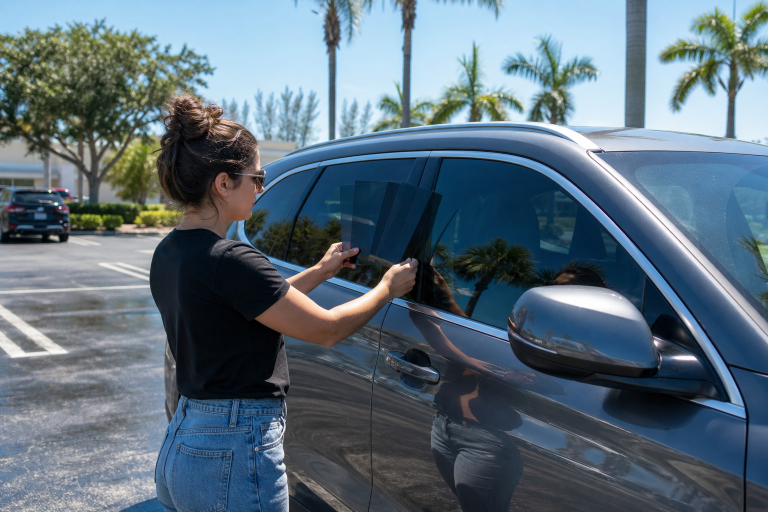
Windshield tint is especially limited because it can affect the driver’s primary viewing area. Medical exemptions may be available in certain situations, but they involve separate conditions and documentation. Confirm the rules that apply to the specific vehicle before installation, rather than relying on a friend’s tint setup or an online shade chart.
Comparing Common Window Film Types
- Dyed film: Often offers an economical, clean appearance and basic glare reduction. It may fade sooner or reject less heat than premium choices.
- Metalized film: Can provide solid durability and heat control, but metal content may interfere with some electronic signals.
- Carbon film: Usually delivers stable color and balanced performance without the shiny look associated with some metalized products.
- Ceramic film: Often provides strong heat rejection and UV control at lighter, more visibility-friendly shades. It generally costs more upfront.
The darkest option is not necessarily the coolest option. Compare the manufacturer’s performance data, warranty, film color, and finished VLT instead of choosing solely by appearance.
Heat, UV Rays, and Glare Reduction
Heat rejection, ultraviolet protection, and glare reduction are related but separate performance goals. Heat-focused films can help reduce solar energy entering the cabin. Glare control can make roads, displays, and mirrors easier on the eyes. UV performance matters because the side and rear glass in many vehicles may allow substantial UVA exposure.
The UVA rays that pass through vehicle windows are one reason to review product-specific UV test data. Certain window films can block more than 99 percent of UVA and UVB light, but buyers should verify the claims for the exact film series and shade being installed.
Matching Tint to Your Vehicle
Window film should support the vehicle’s overall look rather than overpower it. A lighter shade can suit drivers who frequently travel after dark or want a subtle finish. A consistent shade across compatible windows creates a cleaner appearance, but factory privacy glass can make matching more complicated. Consider paint color, interior materials, family use, work travel, and weekend trips before deciding.
What to Look for in a Quality Installation
- Ask which film series, shades, and VLT options are available.
- Request written heat-rejection and UV-performance information.
- Confirm that the quoted VLT accounts for the existing vehicle glass.
- Look for a clean workspace and careful glass preparation.
- Ask about curing time, warranty coverage, and repair procedures.
- Make sure the installer will not pressure you into an illegal shade.
Dust trapped under film, rough edges, obvious gaps, mismatched shades, and vague warranty language are warning signs. A professional installation should look smooth and intentional once curing is complete.
How to Care for Newly Tinted Windows
Keep windows closed for the installer’s recommended period and expect small water pockets while the film cures. Clean only with a soft microfiber cloth and ammonia-free cleaner. Avoid abrasive towels, sharp objects near the edges, and aggressive scrubbing. Save the warranty paperwork and contact the installer promptly if edges begin lifting.
Common Questions About Vehicle Window Tint
Does a darker tint always reject more heat?
No. Darkness controls visible light, while heat rejection depends on the film’s construction and measured solar performance. Some lighter ceramic films can provide substantial heat control.
Is factory privacy glass the same as window film?
No. Privacy glass is built into the glass during manufacturing. Film is applied afterward and can add different heat, UV, color, and VLT properties.
What is best for night driving?
Prioritize legal VLT, low haze, and clear visibility. Drivers who regularly travel after sunset should avoid selecting a shade based only on daytime appearance.
Conclusion
For Fort Myers drivers, the best window tint balances sun control, glare reduction, UV protection, safe visibility, style, and Florida compliance. Compare actual performance data, consider how and when the vehicle is driven, and choose an installer who clearly explains the finished result.